
Trusted by leaders like Nomura Bank and AvidXchange, Autoheal helps platform engineering teams build, govern, and continuously improve AI agents for post-coding workflows.
Agents are writing your code, reviewing your pull requests, fixing broken builds and troubleshooting incidents. But they don't learn from each other, your checks can't keep up, and it's hard to control what they touch. Here's how Autoheal turns them into a self-improving software factory.
San Francisco, CA, Sept. 28, 2026 (GLOBE NEWSWIRE) -- AI is helping engineering teams ship more code, faster than ever. But that acceleration comes with a growing operational burden: more production incidents to respond to, more security vulnerabilities to remediate, and spiraling token costs to contain. Autoheal is built for these challenges and already battle tested at industry leaders such as Nomura Bank and AvidXchange where off-the-shelf point agents failed to deliver.
Today, the company announced a $7.9 million seed round to scale the industry’s most advanced self-improving software factory, giving enterprise platform engineering teams a way to build, deploy, govern, and continuously improve multiplayer cloud AI agents across the software development lifecycle. The round was led by Innovation Endeavors, with Harpinder Singh joining Autoheal’s board, alongside participation from Emergent Ventures, U&I Ventures, Darkmode Ventures, Batch Ventures, and Param Hansa Values. Joining them as angel investors were industry leaders Shawn Kung, Founder of GIT100; Sumeet Arora, Chief Product Officer of Teradata; Anshu Sharma, Co-Founder & CEO of Skyflow; Savin Goyal, Co-Founder & CTO of Outerbounds; and Srikant Gokulnatha, former SVP at ThoughtSpot.
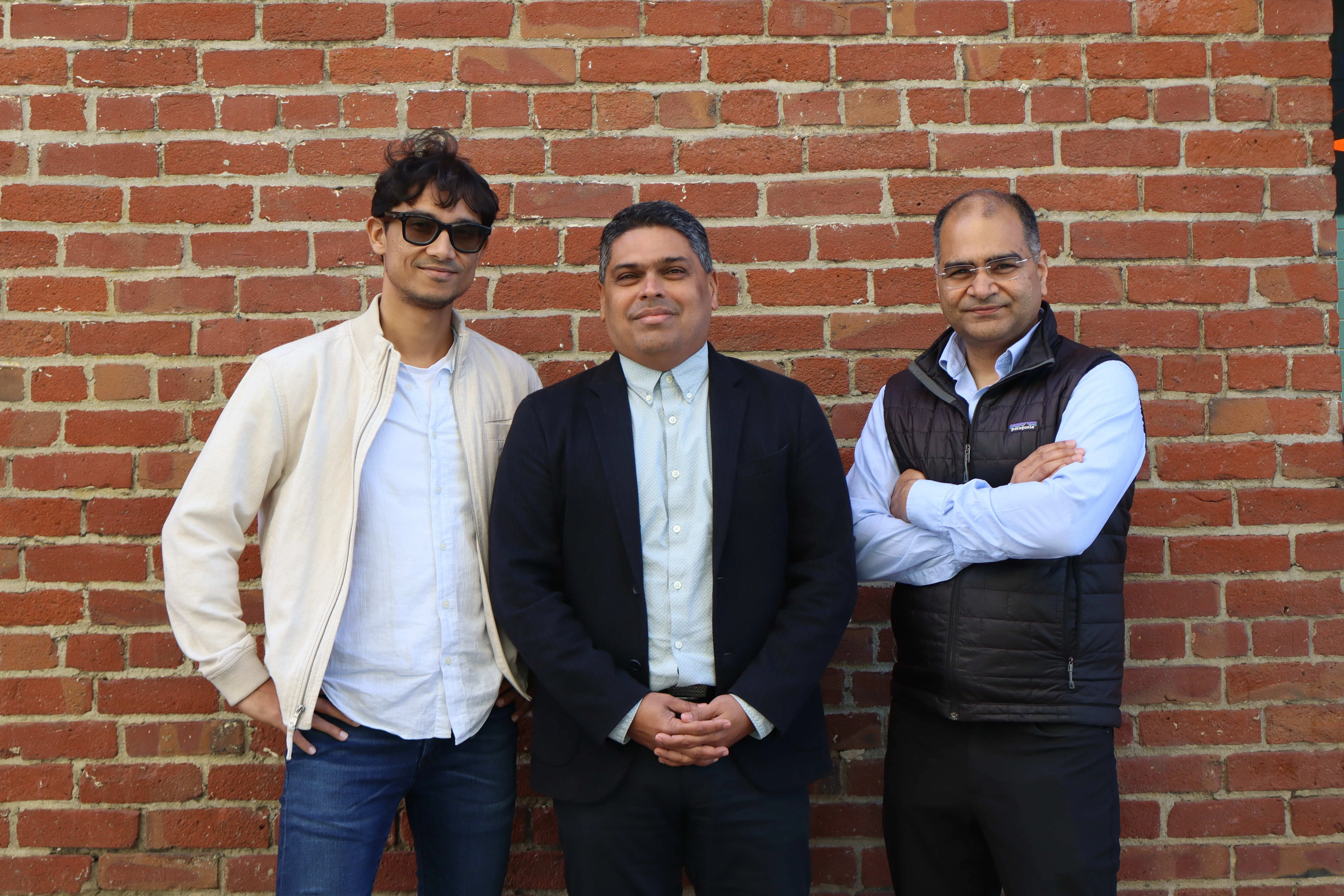
Autoheal founders: Utkarsh Ohm, Sid Choudhury and Puneet Saraswat.
Why platform engineering needs a new operating model
Repetitive SDLC workflows such as incident response and vulnerability remediation consume more than a third of an engineering team’s capacity. As coding agent adoption grows, controlling LLM spend and managing context is joining that list. To manage these demands, platform engineering teams are shifting toward a “software factory” model powered by specialized AI agents.
The Autoheal platform loop.
However, at scale rollout of these agents often fails due to fragmented tools, a lack of shared context, and strict security constraints. Establishing a unified platform for creating, managing, and iteratively improving all software factory agents, including the existing coding agents, has therefore become an immediate priority. This ensures every agent gets the same engineering context, secure production access, private evaluation infrastructure, cost controls, and a way to stay current as the organization changes.
“Our experience taught us that while building the first version of an AI agent is easy, scaling it consistently across the enterprise SDLC is the real challenge," said Sid Choudhury, Co-Founder and CEO of Autoheal. "Platform engineers need more than cloud agents that execute tasks. They need a unified platform to deploy, govern, and continuously improve those agents across complex enterprise workflows. That’s why we built Autoheal."
The Autoheal engineering context graph.
What Autoheal is building
Autoheal’s software factory gives enterprises the infrastructure and tools to transform their engineering organization into a self-improving machine. It connects existing coding agents, code repositories, CI/CD, observability, cloud runtimes, and issue trackers, giving all worker agents in the factory a shared engineering context graph. As these worker agents keep executing post-coding repetitive workflows, two self-improvement agents keep working in the background:
- The Evaluator agent scores every worker agent’s run. For example, a coding agent can be evaluated by scoring the specs and PRs it generates, using the downstream signals of review comments, CI failures and caused incidents as the evaluation criteria.
- The Healer agent fixes low scoring worker agents by opening pull requests that improve skills, prompts, tools, or model selections. It even verifies those changes against historical benchmarks for regressions before engineer review.
For platform engineering teams, this creates a continuous agent healing loop as systems change. Every behavior change is version-controlled in git and requires engineer approval. Actions remain governed and audited, with visibility into access, reasoning, and costs. The end goal is higher accuracy, faster execution, and lower cost per successful task with engineers expanding autonomy as agents prove reliable.
Traction
Autoheal is already operating inside complex regulated environments, where engineering teams are using it to cut incident response times, handle customer support escalations and free up thousands of hours of engineering capacity.
"Our production operations teams spend valuable time triaging alerts and managing incidents, while also pulling engineers away from their software development activities. Autoheal gives us a platform that takes investigation timelines down from hours to minutes. The fact that it runs entirely within our own cloud, in compliance with our controls, made it a natural fit for how we operate," said Sameer Jain, CIO, Wholesale at Nomura Bank.
"In production incident response, Autoheal took our time to root cause to minutes, with evidence our engineers trust. That's time our developers stay focused on feature work. Next, we're shifting it left into other critical parts of our SDLC, because every engineering hour we get back goes into shipping faster for our customers.” said Krish Shetty, CTO & SVP, at AvidXchange.
"Autoheal helped us tackle two major challenges at once: making our engineers faster at troubleshooting across our complex environment, and significantly optimizing our software costs across our monitoring stack." said Vijay Pendyala, SVP Engineering & Customer Success, at Empiric Earth.
Origin story
Autoheal grew out of the founders’ experience building enterprise engineering and AI platforms at Harness, Microsoft Azure, ThoughtSpot and AppDynamics. After scaling Harness to over $200M ARR, the team recognized a new reality: while building individual AI agents had become easy, safely deploying them across the SDLC and across engineering teams had become extremely time and token consuming. To prevent agent sprawl and ensure day-2 governance, a platform must manage agents as code, overseen by continuously learning meta-agents. That insight became Autoheal’s software factory.
“Enterprises are moving quickly from experimenting with AI agents to asking how they can operate them safely and efficiently at scale across the entire software factory,” said Harpinder Singh of Innovation Endeavors. “Autoheal is building the agent infrastructure layer that makes that possible. The opportunity is much larger than one agent or one workflow. It is giving platform teams a repeatable scalable way to deploy specialized intelligence across the engineering organization.”
What’s next
Engineering processes & implicit architecture decisions are locked within an enterprise’s boundary or engineer’s minds. Frontier models have been trained on public internet, open source code and synthetic data but not enterprises’ data. Enterprises want to build sovereign & cost-effective intelligence on this data because it's a competitive advantage. Autoheal will first capture this data by operating the factory and then train small private models of various architectures per customer. These models will soon power the majority of tasks in the software factory which are not generative in nature.
In the long term, the same architecture can extend beyond software engineering into data and security engineering. Autoheal is betting that every large enterprise will run a software factory that has its own population of specialized agents, and wants to be the platform that engineering teams use to build, govern and continuously improve them.
About Autoheal
Autoheal is a self-improving software factory for enterprise engineering teams. It combines a context layer that continuously learns from private engineering data with a governed control plane for AI agents across the SDLC, including popular coding agents. Teams accelerate feature delivery while reducing production incident MTTR, speeding up security vulnerability remediation, and lowering LLM token costs. For more information please visit: https://autoheal.ai/
CONTACT: For further information please contact the Autoheal press office via Bilal Mahmood on b.mahmood@stockwoodstrategy.com and +447714007257





Comments (0)
Login to join the conversation
Login / RegisterNo comments yet. Be the first to comment!